
What You Should Know
Company overview
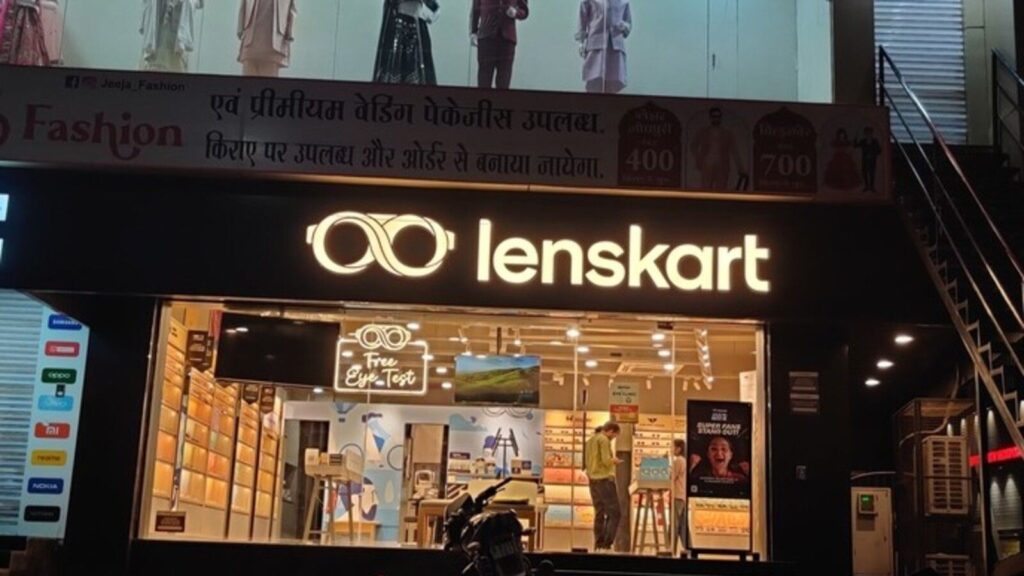
Lenskart, founded around 2010, has grown to become one of India’s largest eyewear retailers, offering prescription glasses, sunglasses, contact lenses and related accessories. Groww+3Wikipedia+3mint+3 The company’s model is omnichannel — it combines an online presence with physical stores (in India and abroad) and in-home services (eye-tests, etc.). Forge+1
In recent years it has scaled aggressively. For example, by FY25 it reported revenue growth of about 22.6% year-on-year. Zerodha+2Groww+2 Also, its international footprint and store count support its ambition at a much larger scale. financialexpress.com+1
Thus from a business perspective, Lenskart taps into two major tailwinds: (a) increasing eyewear/vision care demand in India (as population ages, screen time increases, etc), and (b) the shift to an omni-channel model which gives it more flexibility.
IPO details & valuation
Here are key highlights of the IPO:
- The price band is set at ₹ 382 to ₹ 402 per share. Reuters+2financialexpress.com+2
- The IPO subscription window runs from October 31 to November 4, 2025, with listing tentatively around November 10. financialexpress.com+2Inc42 Media+2
- The issue size is large: fresh issue of about ₹ 2,150 crore and an Offer for Sale (OFS) of about ₹ 5,128 crore, summing to about ₹ 7,278 crore. financialexpress.com+1
- At the upper end of the price band, valuation works out to approximately ₹ 69,726 crore (≈ US$ 7.9 billion) for the company. Reuters+1
Why this IPO matters
- Size & timing: The IPO is one of the largest consumer-tech offerings in India in 2025, signalling investor appetite for growth-oriented retail/omnichannel businesses.
- Profitability shift: Lenskart is turning profitable — for example, in Q1 FY26 it reported a net profit of ~₹ 61.2 crore compared to a loss a year back. Outlook Business This gives it credibility beyond being just a growth story.
- Retail & health tailwinds: Vision care is increasingly important in India — rising screen time, aging population, and competition from international brands all point to potential growth for Lenskart.
- Exit opportunity for early investors/promoters: The significant OFS component means existing investors/promoters are partially cashing out, which is common in large IPOs. NDTV Profit
Key Strengths
- Omni-channel presence: With thousands of stores plus strong digital reach, Lenskart is well-positioned. financialexpress.com+1
- In-house production / supply chain: The company claims strong control over its manufacturing and supply chain, which is a plus in retail. Zerodha
- Brand building + scale: Lenskart has leveraged brand, tech, and service (such as eye-tests at home) to differentiate.
- Profitability emerging: Turning from losses to profit is a positive inflection point for investors.
Key Risks
- Valuation is high: At the upper band, the valuation and implied P/E/EV-EBITDA look steep. For example, during the IPO announcements some analysts flagged that the issue is “prima facie expensive”. financialexpress.com+1
- Competition intensifying: The eyewear/optic space is competitive, both from international brands online/offline and from local players. Lenskart will need to defend its moat.
- Retail/operational risks: Store rollout, managing margins, manufacturing costs, rental/lease expenses all are risks in a retail-heavy business.
- Macroeconomic/market-listing risk: Large IPOs in India are sensitive to broader market sentiment; high valuations may get pressured if market conditions deteriorate.
- Dependence on growth: Much of the valuation hinges on future growth (store expansion, international markets, margin improvements). If growth slows, the premium may disappear.
Top Defence Stocks in India to Watch in 2025
How to approach the IPO as an investor
Given you run a creative design agency and likely have a business mindset, here are some practical thoughts:
- Short-term vs long-term: If you subscribe expecting a quick pop, you should be cautious: high valuations mean less margin of safety. If your horizon is medium to long term (3-5 years), the story could play out if execution holds.
- Lot size and minimum investment: Check the lot size (number of shares/₹ investment) once finalised. For retail investors, understanding how many shares you’ll get matters.
- Entry pricing matters: If the IPO lists at or near the top of the price range, upside might be limited; waiting to see listing day behaviour could be prudent.
- Diversification: Given the size, this IPO might require a big allocation; balance your exposure with other holdings/asset classes.
- Follow the post-listing performance: After listing, monitor how the company performs (store openings, same-store sales, margin recovery, debt, competition). A strong first year post-listing strengthens the case.
My take
I believe Lenskart’s IPO is a high-profile one and deserves attention. The business model is large enough, the tailwinds are favourable, and the move into profitability is a good sign. However, the valuation does seem aggressive — the market is pricing in a lot of growth, and there are considerable execution risks.
If I were advising a friend: I’d say subscribe if you believe in the long-term vision and can tolerate some risk, but don’t allocate more than you’re comfortable losing or locking in for a few years. If you’re more risk-averse or want a safer margin of safety, you might wait to see how the stock behaves after listing and initial quarters.
How this fits your broader design & creative agency world
Given you run a creative design agency and create content (logo design, digital marketing, etc), a few extra points you might appreciate:
- The IPO buzz itself offers potential for creative content angles — e.g., “how an omnichannel brand builds its visual identity before IPO”, “the role of design and UX in scaling retail brands like Lenskart”.
- If you ever work in the retail/consumer brand space, the case of Lenskart demonstrates how design, retail ambience, digital-offline integration become part of the growth strategy.
- On the investor communication side, Lenskart’s storytelling (growth, store expansion, tech + manufacturing) might be useful to study, especially if you create content for other brands preparing to scale or go public.
Final thoughts
To sum up: The Lenskart IPO is an exciting offering in India’s consumer-tech/retail space. It ticks many boxes of growth, brand, and scale. But as with any IPO with aggressive numbers, it demands prudent thinking. For investors with a long horizon, it may have real upside — but one should go in with eyes open about risks and valuation.
If you like, I can also pull together a “Pros & Cons” table and valuation sensitivity scenarios for Lenskart’s IPO (e.g., listing day scenarios, 1-year growth expectations) — would you like me to prepare that?