
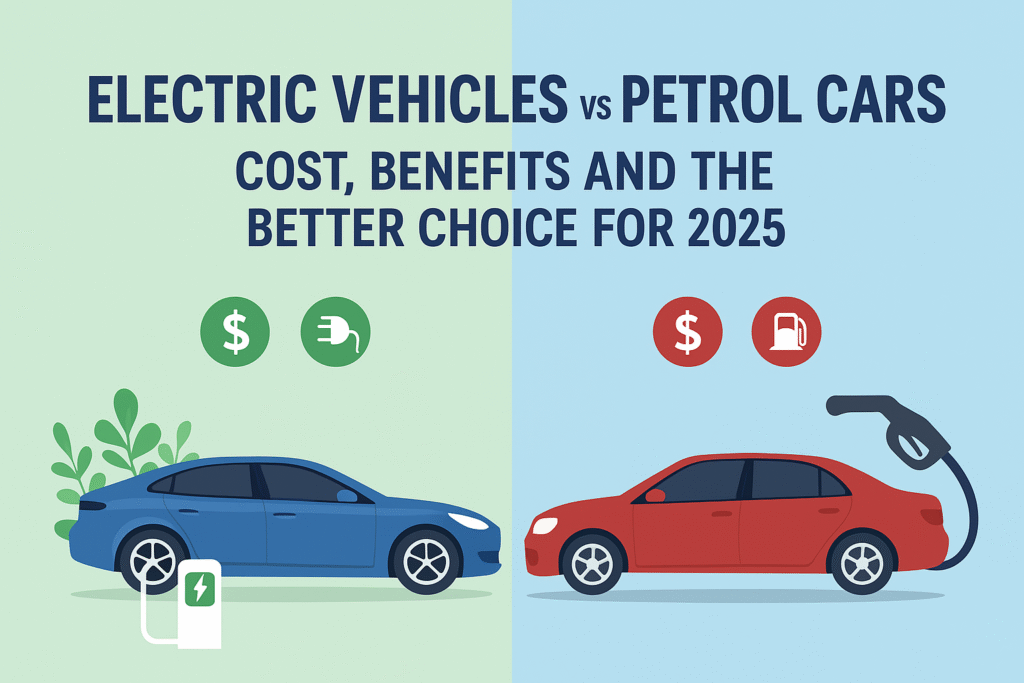
Choosing between an electric vehicle and a petrol car is one of the biggest decisions for new buyers today. Both options have their own strengths, and the right choice depends on your budget, your driving habits and how you look at long-term value. EVs are getting popular because fuel prices keep rising and people want cleaner options. At the same time, petrol cars remain reliable, familiar and easy to maintain for many drivers.
This blog breaks down the real differences between electric cars and petrol cars. You will see how they compare in terms of purchase cost, running cost, maintenance, performance, convenience and environmental impact. By the end, you will have a clear picture of which one works better for your lifestyle in 2025.
Purchase Cost: What You Pay Upfront
Electric cars generally come with a higher price at the time of purchase. The main reason is the battery. It adds a big cost to the manufacturing process. Even though EVs are becoming more affordable every year, they still tend to cost more than petrol cars in the same category.
Petrol cars are cheaper to buy and offer many options in budget segments. This makes them attractive for first-time buyers or anyone trying to save on immediate costs. However, the initial price is only one part of the total cost of owning a car. Long-term expenses tell a different story.
Running Cost: The Biggest Difference Between EVs and Petrol Cars
This is where electric cars clearly win. The cost of charging an EV is much lower than the cost of petrol. Many EV owners charge their car at home, which reduces the cost even more.
A simple example:
If you drive 1,000 km in a month, an EV may cost only a few hundred rupees to charge, depending on local electricity rates. A petrol car will cost many times more because fuel prices keep fluctuating. Over a year or two, the savings become significant.
The more you drive, the more an EV saves you. For people who use their car daily, the running cost advantage is a major benefit.
Maintenance and Service: EVs Are Simpler Machines
Electric vehicles have fewer moving parts. There is no engine oil, no clutch, no spark plugs, and no exhaust system. Because of this, the maintenance cost is usually lower. Most EV owners only need to take care of tyre rotation, brake checks, cabin filters and software updates.
Petrol cars require regular servicing. Oil changes, filter replacements and engine repairs can add up over the years. This is one of the hidden costs of petrol vehicles that many buyers don’t consider.
For long-term maintenance, EVs are generally cheaper and easier to manage.
Performance and Driving Experience
Electric cars offer instant torque, which means quick and smooth acceleration. The ride feels quiet and refined. Many EVs provide a strong performance at low speeds, making city driving more enjoyable.
Petrol cars, on the other hand, provide a familiar driving feel with good overall control. They are available in many power ranges, from small city cars to high-performance sports models. Petrol engines are still known for long-distance reliability and consistent performance on highways.
If you enjoy fast starts and a silent cabin, EVs feel better. If you prefer the traditional engine sound and wider choice of models, petrol cars still appeal.
Range and Refuelling Convenience
One drawback of EVs is range anxiety. Even though modern EVs offer better range than before, you still need to plan longer trips based on charging points. Home charging is convenient, but public charging stations are still growing in many areas.
Petrol cars have no such challenge. You can find fuel stations almost everywhere, and refuelling takes only a few minutes. For people who travel a lot or drive to remote places, petrol cars are still more convenient.
The gap is closing slowly as more charging stations come up, but for now, petrol cars win in terms of convenience.
India Startup News: AI, Space Tech & UN Awards (Nov 2025)
1. Government EV Policy & Incentives (India)
India Policy – click here
Environmental Impact: EVs Are Cleaner
Electric cars release no tailpipe emissions. They help reduce air pollution, especially in cities with high pollution levels. They also support cleaner energy use when combined with renewable sources like solar power.
Petrol cars release carbon emissions and contribute to air pollution. The environmental cost of petrol vehicles is higher, and many people now consider this when choosing a vehicle.
If you care about clean air and sustainability, EVs are clearly the better choice.
Battery Life and Replacement Costs
EV batteries are designed to last many years. Most manufacturers offer a warranty of around eight years. Battery technology is improving, and modern batteries degrade slowly. For most drivers, the battery will last long enough without major problems.
Replacing a battery can be expensive, but improvements in technology are reducing the cost. Many users may never need a full battery replacement during normal ownership.
Petrol cars don’t have this worry, but they face other long-term repair costs that can be just as expensive, such as major engine or transmission repairs.
Resale Value in 2025
Resale value depends on brand, condition and market demand. EVs are still new to many buyers, so resale trends are changing. Premium EVs tend to hold value better than low-cost ones.
Petrol cars still have stable resale value because the market knows them well. But as EV adoption grows, petrol car resale value may slowly decline in the coming years.
Government Incentives and Support
Many governments provide benefits for EV buyers. These include tax rebates, reduced registration fees or subsidies. These policies make EVs more attractive and help balance the higher purchase cost.
Petrol cars don’t offer such benefits and may face stricter regulations in the future as governments push for cleaner transportation.
Which One Should You Choose?
If you want low running cost, quieter driving and an environmentally friendly option, an electric vehicle is a strong choice. It is ideal for city driving, daily use and short or medium trips.
If you drive long distances regularly or live in an area where charging stations are limited, a petrol car may be more practical. It offers convenience, quick refuelling and a reliable experience.
The best choice depends on your lifestyle. Both options have value, but the trend is moving towards EVs as technology improves and costs drop.
Final Thoughts
The debate between electric vehicles and petrol cars is not about which one is good and which one is bad. It is about what fits your needs. In 2025, EVs are more efficient and cleaner, but petrol cars still offer flexibility and wide availability. Before buying, think about your daily usage, your budget and how long you plan to keep the car. A clear understanding of cost and benefits will help you make the right choice for the future.