
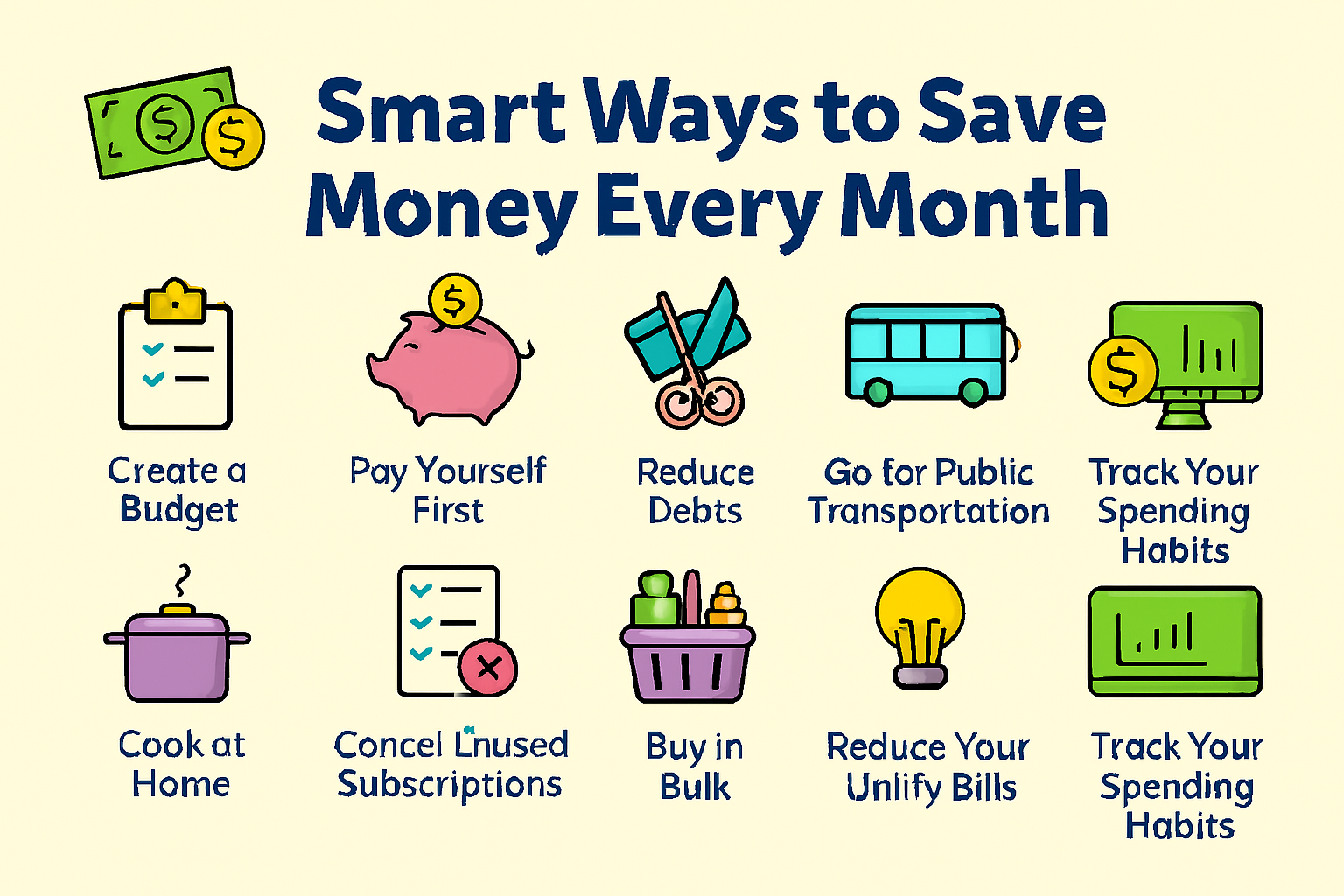
Saving money sounds simple, but for many people it’s one of the hardest habits to build. Monthly expenses, bills, and unexpected costs make it feel like your salary disappears too fast. The good news is that saving doesn’t require a big income. What you really need is a clear plan and small daily habits that add up.
This guide explains how to save money smartly every month, without feeling restricted or stressed. These steps work for students, salaried people, freelancers, or anyone who wants better control of their money.

1. Start by Tracking Your Spending
You can’t save money unless you know where it’s going. Most people underestimate their small expenses. A little daily spending on food delivery, subscriptions, or online shopping can drain your budget quickly.
Spend one month tracking everything:
- Food
- Travel
- Groceries
- Online shopping
- EMI or loans
- Entertainment
Use simple tools like:
- Google Sheets
- Notes app
- Money manager apps
Once you see your spending clearly, you’ll spot areas where you can cut down easily.
2. Follow the 50-30-20 Rule
A simple way to manage your monthly income is the 50-30-20 method. It works for almost everyone.
Break your income like this:
- 50% for needs: rent, groceries, bills, transportation
- 30% for wants: eating out, entertainment, shopping
- 20% for savings and investments
If 20% looks too high, start with 10%. The goal is consistency. Saving regularly matters more than saving a large amount.
3. Create a Monthly Budget That Matches Your Lifestyle
A budget isn’t about restricting yourself. It’s about making your money work for you. Create a simple plan at the start of each month.
Your budget should include:
- Fixed expenses (rent, EMI)
- Variable expenses (food, fuel)
- Savings target
- Personal spending limit
Review your budget every month and adjust it as needed. When you follow a budget for 2–3 months, it becomes a natural habit.
4. Build an Emergency Fund First
Before you think about long-term investing or big savings, create an emergency fund. Life is unpredictable, and having backup money removes stress.
An emergency fund should cover:
- 3 to 6 months of expenses
Keep it in:
- A savings account
- A liquid mutual fund
- A fixed deposit
This gives you quick access without touching your main savings.
5. Automate Your Savings Every Month
One of the smartest ways to save money is by automating it. Set up automatic transfers right after your salary arrives.
You can automate:
- SIP in mutual funds
- Recurring deposits
- Transfers to a savings account
When the money moves automatically, you won’t feel the urge to spend it. This single habit can change your financial life.
6. Avoid Impulse Purchases
Buying things on impulse may feel good in the moment, but it hurts your savings. Use a simple method called the “24-hour rule.”
Whenever you want to buy something:
- Wait for 24 hours
- Ask yourself if you still need it
- Check if it fits your budget
- Compare prices online
Most impulsive buying happens emotionally, not logically. Waiting helps you avoid unnecessary spending.
7. Cut Down on Common Money Drains
You don’t need to stop living your life. Just identify a few places where money leaks out every month.
Common drains include:
- Frequent food delivery
- Unused subscriptions
- Shopping during sales
- Premium app memberships
- Expensive transport choices
Reducing these by even 20% can increase your savings a lot over a year.
8. Buy in Bulk for Essentials
Things you use daily—like rice, flour, oil, toiletries—are cheaper when bought in bulk. Buying monthly or quarterly saves money and reduces small frequent purchases.
Tips:
- Compare prices across stores
- Use online grocery apps for offers
- Share bulk purchases with family members
Just avoid buying perishable items in large quantities.
9. Cook More Meals at Home
Eating out or ordering online can drain your money fast. Cooking at home can save thousands every month.
Simple ways to save:
- Prep meals on weekends
- Carry homemade lunch
- Reduce food delivery to once a week
- Use seasonal vegetables and fruits
You’ll save money and eat healthier too.
10. Find Ways to Increase Your Income
Saving money becomes easier when you earn a bit more. You don’t need a big side business. Even small extra income helps.
You can earn through:
- Freelancing
- Selling digital services
- Designing social media posts
- Part-time remote work
- Teaching skills online
- Selling old items you don’t use
A small side income can boost your savings dramatically.
11. Reduce High-Interest Debt
If you have credit card debt or high-interest loans, clear them first. They reduce your savings and increase stress.
Plan like this:
- Pay off the highest-interest debt first
- Avoid minimum payments
- Stop using credit cards until your balance is cleared
Debt-free living gives you more freedom and better monthly savings.
12. Set Clear Saving Goals
Savings grow faster when they are tied to a purpose. Instead of saying “I want to save more,” set specific goals.
Examples:
- Save ₹1 lakh for emergencies
- Save ₹50,000 for a vacation
- Build ₹5 lakh in investments
- Save ₹10,000 every month
When you know what you’re saving for, staying disciplined becomes easier.
13. Review and Improve Every Month
Saving money is a long-term habit. Review your spending each month and see where you can improve.
Ask yourself:
- Where did I overspend?
- Can I reduce this expense next month?
- Did I meet my saving target?
- How can I increase savings next month?
Small improvements lead to big results over a year.
Conclusion
Saving money smartly every month isn’t about strict rules or sacrifices. It’s about knowing your priorities, planning your expenses, and staying consistent. With the right habits, anyone can build financial stability and long-term wealth.
Start small, stay focused, and follow these steps regularly. Over time, your savings will grow, your stress will reduce, and your financial confidence will increase.